Your first three chakras were programmed before you turned four. That’s why you can’t think your way out of a block.
Each chakra forms at a specific stage of life. If trauma, neglect, or overwhelm hits during that stage, the chakra closes around the wound.
Your body does this to keep you safe from pain. Over time, that protection hardens into tension, and the tension blocks your chakras.
To unblock your chakras, find out when and how your old wounds began.
This guide shows you why your chakras might be blocked and which body-based practices release each block. I use both ancient chakra wisdom and modern psychology.
If you’re ready to do real spiritual work, start here.
Jump to a section:
- Root chakra: foundation & security
- Sacral chakra: creativity & emotion
- Solar plexus chakra: power & will
- Heart chakra: love & balance
- Throat chakra: communication & creativity
- Third eye chakra: intuition & insight
- Crown chakra: divine connection
- The second cycle: adult development
- What to expect when chakras unblock
What are chakras? Your body’s energy system
Chakra is the Sanskrit word for “wheel.” Your seven chakras are energy centers that run along your spine. Ancient traditions mapped them through internal observation.
Modern research has detected electromagnetic emissions from each chakra.
The two currents of energy
Your chakras form where two currents meet:
- The Liberating Current (Upward): Lifts you from physical limitation toward expansive states. It carries energy from earth to cosmos, up through your chakras.
- The Manifesting Current (Downward): Turns abstract ideas into material reality. It condenses cosmic energy into solid form.
Think of your chakras as spinning wheels or gears. When they’re healthy, your energy moves and grows.
The three gunas (qualities of matter)
Every chakra is built from three fundamentals:
- Tamas (inertia/matter): Dominates chakras 1-2. It gives you stability and mass.
- Rajas (motion/energy): Dominates chakras 3-5. It’s the force that breaks stillness.
- Sattva (consciousness): Dominates chakras 6-7. It carries abstract thought and spiritual connection.
Find the quality that’s strongest in you, and you’ll see where your chakras are likely blocked.
Root chakra (Muladhara): foundation & security

Location: Base of your spine
Element: Earth
Color: Red
Developmental Stage: Womb to 12 months
Developmental Task: Physical identity, self-preservation
Right: To be here and have
Demon: Fear
Symbol: Yellow square (four directions of material foundation) containing a downward-pointing triangle (energy descending into matter)
How the Root Chakra Forms
It starts in the womb and runs through your first year. In that year, you answer one question:
Is it safe to exist?
This stage is called trust vs. mistrust. An infant can’t survive alone, so you depend on your caregivers, your mother and father.
If they feed you when you’re hungry, hold you when you’re scared, and keep you warm and safe, you develop a basic trust in the universe.
Your root chakra programs a belief: The world is safe. I belong here. My needs will be met.
Absent, neglectful, hostile, or inattentive caregivers install a different program.
The world is dangerous. I should not exist. My needs won’t be met.
Root chakra traumas
Birth trauma: The first moments of life set the stage. Technological birth, like incubator separation or circumcision without anesthesia, can cause a dysfunctional root chakra.
Abandonment: A physically or emotionally absent caregiver. Adoption, separation, or a parent who “checked out” programs the infant for “I’m not wanted.”
Physical neglect: Malnourishment, shaming situations, or inconsistent care can program the body for scarcity.
Physical abuse: It creates dissociation. A child learns it’s not safe to live inside the body.
Inherited trauma: A parent with lingering survival fears (war, poverty, persecution, the Holocaust) can pass that anxiety to a child without a word. Your nervous system might hold your parents’ fears.
Boundary violations: Invasive medical procedures, no physical privacy, or enemas.
A severely wounded root chakra, especially one rejected in the womb or early infancy, forms a strong pattern:
- Questions their right to exist
- Lives mostly in their head (upper chakras compensate for weak lower chakras)
- Has a thin, wiry body with a contracted torso
- Appears highly intelligent and creative
- Feels like they don’t belong in this world
- Struggles with physical presence and embodiment
Healing is slow. It’s safe to come back to your body.
Deficient Root Signs:
- Disconnection from the body
- Underweight, spacey, ungrounded
- Fearful, anxious, restless
- Poor focus and discipline
- Financial difficulty
- Chronic disorganization
- Weak boundaries
Excessive Root Signs:
- Obesity, overeating
- Hoarding, material fixation
- Sluggish, tired, resistant to change
- Addiction to security
- Rigid boundaries
- Fear of change
Physical Malfunctions: Bowel disorders, bone/teeth issues, leg/feet/knee problems, eating disorders, frequent illness, and adrenal fatigue.
How to unblock root chakra
The Core Work: Reconnect with your body. Without solid ground, upper chakra work turns into spiritual bypassing.
The Science of Grounding:
Your body resonates at 6.8 to 7.5 cycles per second, a rate linked to Earth’s own frequency (the Schumann resonance). Touch the earth to reduce stress and sync with the planet.
Somatic practices
The Grounding Cord Visualization:
Sit or stand comfortably and picture a cord of energy running from your spine deep into the earth. Like a lightning rod, it discharges excess stress and anxiety into the ground.
The earth absorbs and neutralizes it. Do this for 5-10 minutes daily.
The Riding Exercise:
Stand on a moving train or bus without holding on. Bend your knees, find your center of gravity, and let your body balance on its own. This grounds your consciousness in your physical body.
Grounding Exercise (from bioenergetic therapy):
Stand with your feet shoulder-width apart, toes slightly inward, knees bent. Bend and straighten your knees slowly while you breathe.
Keep going until your legs start to tremble. That tremble is new energy entering your legs. Push against the ground to build a charge.
Body Drawing:
Draw how your body feels, using crayons on a large sheet of paper. Don’t think. Just feel.
What colors, shapes, and densities show up in each area? Then hold the drawing in front of a mirror. What does it reveal about your internal schema?
Therapeutic approaches
- Examine your early childhood and your relationship with your mother
- Regressive techniques (rebirthing, holotropic breathwork) for womb and birth trauma
- Lying-down work for pre-ambulatory stages
- Pushing and kicking with your feet to release energy cycles
Affirmations:
“It is safe for me to be here. The earth supports me and meets my needs. I love my body and trust its wisdom. I am immersed in abundance. I’m here, and I’m real.”
Sacral chakra (Svadhisthana): creativity & emotion
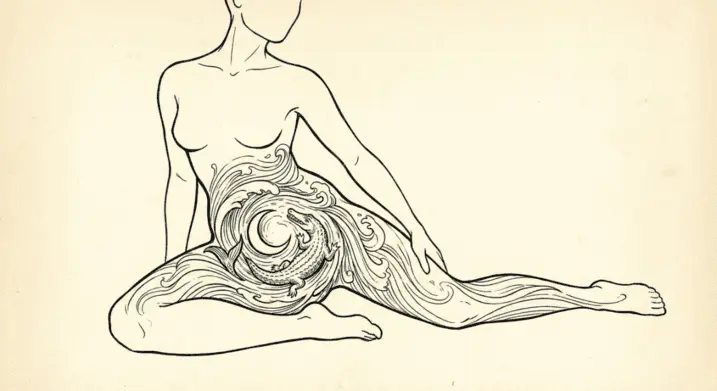
Location: Lower abdomen, sacral plexus
Element: Water
Color: Orange
Developmental Stage: 6 months to 2 years
Developmental Task: Emotional identity, self-gratification
Right: To feel and want
Demon: Guilt
Symbol: Crescent moon (emotional tides) containing the Makara (crocodile of dualistic passions)
Moving from root to sacral is a shift from unity to duality. The root chakra is singular: survival. The sacral chakra is polarity: pleasure and pain, self and other, desire and fear.
Change comes when polarities interact (Yin/Yang), and they return to unity. Opposites generate all movement, emotion, and creativity.
How the Sacral Chakra Forms
Around six months, you begin to tell the inner world from the outer one. You want to explore, taste, and touch. You feel the urge to move.
The sacral chakra covers movement, sensation, emotion, desire, and pleasure. Its main developmental task is separation versus attachment. You move from symbiotic fusion with your mother to becoming a distinct self.
When your mother gives you consistent emotional warmth, you feel safe and desired. The world is yours to explore.
Sacral chakra traumas
Tactile deprivation: Not being held, touched, or physically comforted. Touch is the first feeling we experience. Without it, a child loses touch with self and others.
Emotional environment: A child absorbs the emotional atmosphere around them. A family filled with rage, fear, or coldness writes the child’s emotional program. Volatile parents raise volatile or emotionally numb children.
Enmeshment: The child never gets the chance to emerge as a separate self. The parents need the child to satisfy their own emotional needs, so they take the child’s feelings for family purposes.
Sexual abuse: Anything that violates natural sexual development, from invaded privacy and exposure to porn to sexual teasing and overt abuse. Sexual abuse is the root cause of a dysfunctional sacral chakra. Pleasure and pain get confused, boundaries shatter, and the body becomes an enemy.
Denied feelings: “You have no right to be angry.” “Don’t feel that way.” When natural emotions get punished or rejected, the child learns to distrust their own inner experience.
Movement restriction: A child needs to move according to their feelings. Too many restrictions create a rigid, armored body that can’t flow.
A child deprived in chakras 1-2 can develop these patterns:
- Is emotionally oriented toward merging and giving
- Is dependent and seeks completion through others
- Has a soft, underformed body (often a collapsed chest)
- Questions their right to have (not just exist)
- Desperately wants love and, when frustrated, turns to food or substances
- Excels at nurturing others and struggles to nourish themselves
- Is a prime candidate for codependency
Deficient Sacral Signs:
- Rigid, stiff movements
- Emotional unresponsiveness or flatness
- Fear of pleasure, guilt about enjoyment
- Lack of desire or passion
- Poor social skills
- Fear of change
- Weak boundaries, easily invaded
Excessive Sacral Signs:
- Ruled by emotions, mood swings
- Sexual addiction or obsession
- Constant need for stimulation
- Poor boundaries (too open)
- Emotional dependency
- Addictive behaviors
- Scattered energy, can’t focus
Physical Malfunctions: Hip pain, reproductive issues, lower back problems, bladder issues, menstrual irregularities.
How to unblock sacral chakra
The Core Work: Feel. Move. Allow pleasure without guilt. Reclaim your right to want things.
Somatic practices
The Jazz Walk:
Walk with bent knees and swinging hips, and let your pelvis move freely forward, back, and side to side. This helps with pelvic freeze caused by sexual or emotional trauma.
Armor often builds in the pelvis first. Loosen it to restore flow to your lower body.
What does your body do unconsciously? If you fidget, fidget more on purpose. If you contract, contract fully.
This brings unconscious patterns into your awareness. Then ask, “What is this movement trying to express?”
5-10 minutes a day.
Emotional Release (with caution):
Emotional release can heal or retraumatize you. Establish grounding first.
Have an anchor: a safe memory, a comfortable position, and a connection to your inner strength. Release slowly and raise the intensity gradually. Give the release meaning.
Containment (for excess):
Practice overwhelming emotions instead of acting on them right away. Let the feeling build and deepen, without denying it.
Working Through Guilt:
- Put the guilty behavior in context. What forces were acting on you?
- Examine the underlying needs. What were you trying to satisfy?
- Look for modeling. Who taught you this pattern?
- Find healthier ways to meet underlying needs
- Make appropriate amends
- Create new behavioral plans
- Forgive yourself and move on
Yoga Poses:
- Pigeon Pose: Deep hip opening
- Goddess Pose: Sacral activation
- Bound Angle Pose: Hip opening
- Cat-Cow: Pelvic fluidity
Affirmations:
“I deserve pleasure in my life. I embrace and celebrate my sexuality. My emotions are free-flowing and balanced. I allow myself to feel fully.”
Solar plexus chakra (Manipura): power & will
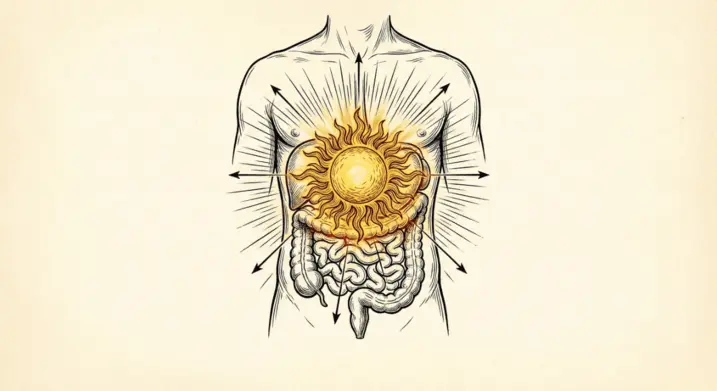
Location: Solar plexus
Element: Fire
Color: Yellow
Developmental Stage: 18 months to 4 years
Developmental Task: Ego identity, self-definition
Right: To act and be free
Demon: Shame
Symbol: Ram (assertive energy) and T-shaped svastikas (Hindu solar fire symbols representing energetic shift)
How the Solar Plexus Forms
Your toddler self is still dependent and developing. You want to do things on your own, but you can’t do them well yet. You do them anyway, for the sheer pleasure of it.
Language gives you the concepts of time, cause, and effect. You start to choose which impulses to act on.
If this stage goes well, the child develops will and personal power. If it goes badly, shame becomes the dominant force in their life.
The third chakra is about transforming instinct into willed action.
Solar plexus traumas
Authoritarianism: “Don’t talk back.” A parent breaks the child’s will and treats obedience as the highest good. The child learns to hand their will over to others.
Shaming: “You should be ashamed of yourself.” This attacks who the child is and imprints the idea “I am flawed.”
Punishment for self-governing: The child reaches for independence and a parent slaps them down.
Volatile situations: The surroundings change constantly, so the child never knows what’s coming. Hypervigilance replaces confidence.
Parentified child: Adults expect the child to fill adult roles too young, like raising siblings or supporting emotionally unstable parents. The child feels inadequate because the expectations exceed what they can handle at their age.
Physical abuse: This is abuse of authority, and it teaches the child that power means domination.
A disrupted third chakra shows up in these patterns:
- Pleases and resists at the same time
- Complies outwardly and defies inwardly
- Turns blocked energy inward (self-punishment)
- Has a dense, muscular body holding compressed energy
- Is shame-based and fears humiliation
- Struggles to assert themselves
- Sees life as “have-tos” rather than choices
You get locked in a holding pattern and can’t move forward. You turn against yourself, try to please but often fail, then become harshly self-critical. That plants the seed for a grim life.
You want affection, but you’ve learned it costs you your autonomy. So you feel both need and anger toward the same person.
Deficient Solar Plexus Signs:
- Low energy, weak will
- Easily manipulated
- Poor self-discipline
- Low self-esteem
- Collapsed middle, poor posture
- Victim mentality
- Passive, unreliable
- Avoids confrontation
Excessive Solar Plexus Signs:
- Dominating, controlling
- Need to be right
- Manipulative, power-hungry
- Temper tantrums
- Driving ambition (Type A)
- Competitive, aggressive
- Uses will to override feelings
- Workaholic
Physical Malfunctions: Eating disorders, digestive problems, ulcers, diabetes, chronic fatigue, hypertension, liver/gallbladder issues.
The third chakra can collapse under shame and pull the whole torso with it. The chest caves and restricts your breathing, the throat constricts, and the head feels out of place relative to the body.
Shame-bound personalities:
- Honor thoughts over instincts
- Constant internal criticism
- Not feeling good enough
- Monitor every impulse for potential failure
- Cannot risk exposure
- Experience shame attacks that spiral into self-condemnation
This fuses shame and self and blocks the connection between mind and body.
How to unblock the solar plexus chakra
The Core Work: Attack shame and build authentic power by confronting obstacles. Build strong ego strength.
Attacking Shame:
- Identify the critical voice. Whose voice does it sound like?
- Ask what forces acted on that person to create the criticism
- Turn the internal monologue into a dialogue. Where’s the rebellion that says “Back off!”?
- See your childhood self in the context of the abuse, and show it compassion
- Replace shaming programs with inner-child dialogue: “You did nothing wrong. You didn’t deserve this.”
For Deficient Third Chakra:
- Build metabolic energy through diet and exercise
- Engage in activities to leave you feeling energized
- Take on challenges; avoidance keeps you undercharged
- Develop will through routines and goals
- Risk being wrong; perfectionism is shame in disguise
For Excessive Third Chakra:
- Practice relaxation, guided meditation
- Let go of control
- Yoga for flexibility (rigid will = brittle will)
- Increase function in other chakras (heart relaxation, grounding)
- Don’t engage the third chakra directly (creates a power struggle)
Working with Anger:
Let yourself feel anger. It’s empowering. Release the original anger wound so it stops spilling into your present relationships.
Yoga Poses:
- Boat Pose: Core activation
- Warrior III: Balance and strength
- Twists: Digestive fire, detoxification
- Sun Salutations: Building heat
Affirmations:
“I honor the power in my being. I accomplish tasks easily and effortlessly. The flame inside me burns through all blocks and fears. I can do whatever I want to do.”
Heart chakra (Anahata): love & balance
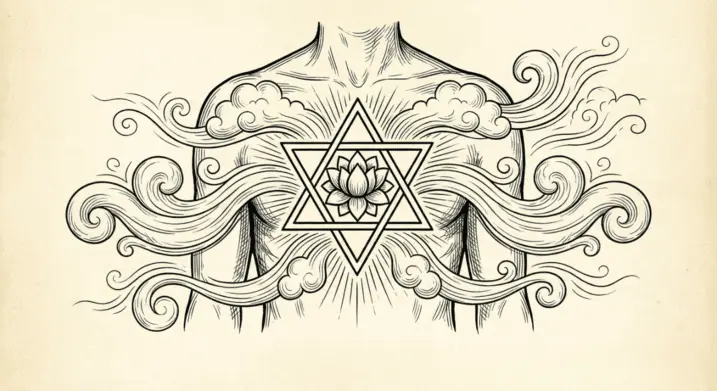
Location: Heart center
Element: Air
Color: Green
Developmental Stage: 4 to 7 years
Developmental Task: Social identity, self-acceptance
Right: To love and be loved
Demon: Grief
Symbol: Six-pointed star (integration of upward liberating and downward manifesting currents, the point where matter and consciousness perfectly balance)
Below your heart chakra sits a tiny eight-petaled lotus called Kalpataru, the wishing tree. It holds your soul’s deepest longings, the wishes you may have forgotten or suppressed. Healing your heart chakra sometimes means descending beneath layers of conditioning to recover what you want.
How the Heart Chakra Forms
Your social identity forms between ages four and seven, often at the cost of your earlier identities. You learn to relate beyond your family. You reach toward others, form friendships, and develop empathy.
The heart chakra is the center. It bridges the lower chakras, which relate to the body and the individual self, and the upper chakras, which relate to consciousness, mind, and connection to the universe.
The family sets the template for all relationships. Was conflict resolved with discussion or violence? Was love conditional or freely given? Were relationships balanced or full of power struggles?
Heart chakra traumas
Rejection: The universal wound. Rejection tells you you’re unworthy and triggers infantile abandonment fears.
Conditional love: “I’ll love you if you’re good/quiet/successful.” A child learns that love has to be earned.
Abuse within relationships: All abuse can traumatize the heart chakra because it betrays love. It’s worse when it comes from people we love and trust.
Divorce/family rupture: This shatters the template for relationships. Children often blame themselves.
Loss: Death, abandonment, separation. Ungrieved losses armor the heart chakra.
Cold or unavailable parents: The child adapts and becomes emotionally unavailable.
A heart wounded by rejection, especially when a parent expects the child to “grow up,” can create these patterns:
- Achievement-focused
- Afraid of intimacy, commitment, feelings
- Rigid body armor, held-back energy
- Excellent at work, troubled in relationships
- Can’t feel satisfied no matter how much they achieve
- Charming but emotionally unavailable
- Seductive but abandons before being abandoned
The authentic self never feels loved for who they are, no matter what they accomplish. They only feel loved for performance.
The Hysteric variant (more common in women): The wounds are similar, but the feelings get pushed forward in melodramatic expression instead of held back. The exaggerated emotions mask a deep disconnection.
Deficient Heart Signs:
- Cold, withdrawn
- Difficulty empathizing
- Bitter, critical, judgmental
- Fear of intimacy
- Can’t let love in
- Isolating, lonely
- Holds grudges
- Self-neglecting
Excessive Heart Signs:
- Codependent, smothering
- Jealous, possessive
- Uses love to meet own needs
- Poor boundaries in relationships
- Demanding, clingy
- Sacrifices self for others
- Can’t be alone
Physical Malfunctions: Heart disease, breathing problems, chest tightness, circulation problems, and immune disorders.
Unresolved grief can restrict your breath and close your heart.
When a lover leaves, you lose more than the person. You lose the part of yourself they activated: your playfulness, your sexuality, your openness. Part of grieving is reclaiming it.
How to unblock heart chakra
The Core Work: Self-acceptance. Grief work. Learning that love and autonomy can coexist.
The Task of Self-Acceptance:
Your inner world has many parts: the critic, the child, the achiever, the lover, and the rebel. Each wants something different. True self-love means bringing them into a loving relationship with each other.
Exercise: List your inner parts. What does each one want? How realistic are those desires? Which parts need a better relationship with each other?
Grief Work:
Take deep breaths to release grief. Grief is like clouds covering the sky. Let them dissolve and the sun shines.
Questions to ask:
- Why was this person/thing so special?
- What did they bring that I’m missing in myself?
- What part of me was bonded to them?
- What have I lost touch with in myself as a result?
Forgiveness:
Forgiveness doesn’t mean justifying harm. It means understanding, with compassion, the forces that acted on others and on you. That frees your heart for spiritual growth.
Forgive yourself first. See your childhood in context and understand why you did what you did. Separate who you are from the mistakes you made.
Love Must Be Willed:
Love is action. When the feeling fades, you create love through loving behavior.
Yoga Poses:
- Camel Pose: Heart opening
- Cobra Pose: Chest expansion
- Bridge Pose: Opening front body
- Fish Pose: Throat and heart opening
Affirmations:
“I am worthy of love. I forgive myself and others. My heart is open to giving and receiving love. Love flows freely through me.”
Throat chakra (Vishuddha): communication & creativity
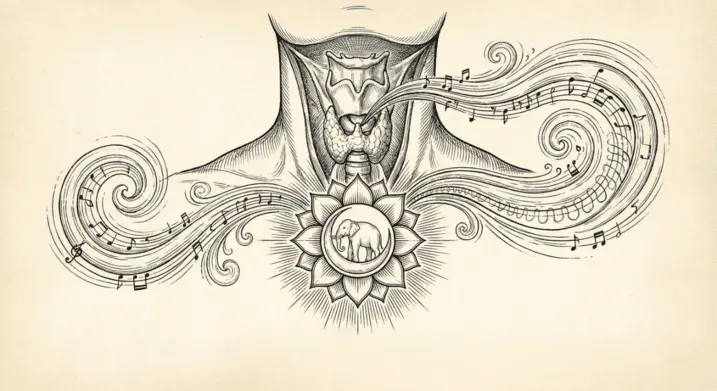
Location: Throat
Element: Sound/Ether
Color: Blue
Developmental Stage: 7 to 12 years
Developmental Task: Creative identity, self-expression
Right: To speak and hear the truth
Demon: Lies
Communication is more than words. It’s a rhythmic force. When vibrations oscillate at the same frequency, they “entrain” and lock into phase with each other.
You can see this when conversations flow: you’re on the same frequency. When it clashes, you struggle. A healthy throat chakra broadcasts and resonates, creating a coherent vibration that syncs with others.
How the Throat Chakra Forms
Ages seven to twelve are when communication and creativity develop. You master language and develop symbolic thinking. You can mentally represent actions, reason, and understand broader time frames.
A child earns recognition by producing things. School replaces family as the main focus.
Art supplies, books, and instruments open creative possibilities. The child brings home drawings and shares ideas to contribute to the world.
The throat chakra is the gateway between your inner and outer world. The outside world only knows what’s inside you through your self-expression.
Throat chakra traumas
“Don’t talk back!”: Authoritarian environments where questions are forbidden. Adults devalue the child’s truth, and the child learns their inner voice doesn’t matter.
Lies and mixed messages: Hearing “I love you” while being mistreated. Being asked to apologize for things you’re not sorry about. The child learns to lie to survive.
Secrets: Abusers threaten victims of sexual abuse into silence. Family shame can’t be spoken about outside the home. Secrets need monitoring, and anything that might escape can kill spontaneous expression.
Yelling and screaming: Hostile vocal environments teach a child either to turn off their listening or to dominate conversations defensively.
Not being heard: Ignored feelings and ideas teach the child that communication is pointless. The throat chakra shuts down.
Excessive criticism: It blocks creativity. If everything you create is wrong or bad, why create at all?
When manipulation breaks trust, often by the parent of the opposite gender, a specific pattern forms:
- Skilled communicators, charismatic
- Comfortable with power, they perform well
- Pull energy upward (broad shoulders, narrow hips)
- Passionately defends underdogs
- Attacks challengers when they feel challenged
- Vulnerability is intolerable
- Deception may become a survival strategy
Underneath this persona, they cheer for the weak because they secretly identify with weakness.
Deficient Throat Signs:
- Fear of speaking
- Small, weak voice
- Difficulty expressing feelings in words
- Shy, introverted
- Tone deaf, poor rhythm
- Doesn’t occur to them to communicate
- Keeps secrets even when unnecessary
Excessive Throat Signs:
- Talks constantly as defense
- Can’t listen
- Interrupts, dominates conversations
- Gossips
- Loud or shrill voice
- Uses words to discharge energy without real content
Physical Malfunctions: Throat disorders, thyroid issues, neck/shoulder tension, jaw problems, and hearing issues.
Lies live in the body as well as in words. A person afraid to show joy lies with their body by restraining their face and arms.
Living in truth creates resonance between you and others. Living in lies creates a sense of suspension and interrupts the natural flow.
The lower chakras need truth to function:
- Fourth chakra acceptance: You don’t need to deny truth
- Third chakra strength: You can express truth even when meeting confrontation
- Second chakra feeling: You can hold contradictory truths without forcing false resolution
- First chakra grounding: You feel safe enough to be authentic
How to unblock throat chakra
The Core Work: Express. Eliminate sound pollution. Clear the gateway between inner and outer.
Toning:
Toning lets your basic vibration emerge as sound, free of words and melodies.
Warm up physically. Shake, stretch, and bounce. Then stand grounded, close your eyes, and take a deep breath.
Let a sound come out. It may be a groan, a squeal, or a change in tone. Let it come and don’t judge it.
Eventually a note settles that feels right for you. That’s your own sound. Sing it fully and let it come from your entire body.
Communication Skills:
The need to be heard: Being heard often matters more than finding solutions. Acknowledge feelings before you problem-solve.
Active listening: Quiet yourself completely. When the other person finishes, say back what you heard in your own words. Only after they confirm you understood, share your perspective.
Writing: If you freeze in conversation, write first. Vent without censoring, then refine what you want to say.
Clearing the Field:
Eliminate toxic noise where possible. Sound pollution is real.
Have a silent time every day. A quiet environment helps reset your vibrational field.
Affirmations:
“I hear and speak the truth. I express myself with clear intent. Creativity flows in and in me. My vocal expression is necessary.”
Third eye chakra (Ajna): intuition & insight
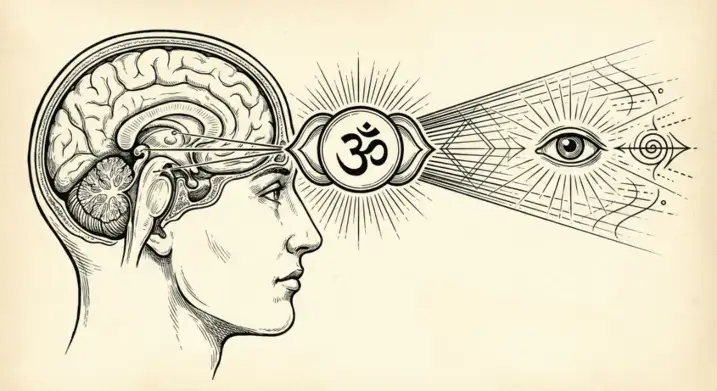
Location: Forehead/brow
Element: Light
Color: Indigo
Developmental Stage: Adolescence
Developmental Task: Archetypal identity, self-reflection
Right: To see
Demon: Illusion
Your brain works holographically: each part contains information about the whole. Your third eye can perceive meta-patterns, and a single perception can reveal the whole picture.
That’s why intuition often arrives complete instead of being built piece by piece.
How the Third Eye Forms
The capacity for abstract thinking develops in your teens. You can consider hypotheticals, recognize patterns across contexts, and think about thinking.
Who am I? What do I believe? Where do I fit in the larger scheme?
You begin to see yourself as part of a greater whole. Your interest in philosophy and spirituality awakens.
The third eye chakra is about pattern recognition and seeing beneath surface reality.
Third eye traumas
“What you see doesn’t match what you’re told”: Gaslighting. The child sees abuse but is told it’s love, and learns to distrust their own perception.
Invalidation of intuition: “You’re imagining things.” “That’s not real.” When psychic experiences or gut feelings get dismissed, the child starts to revoke their inner knowing.
Ugly or frightening environments: War zones, domestic violence, visual horror. The child may shut down visual processing entirely.
Denial modeled: When parents refuse to see obvious problems, children learn that reality can be selectively edited.
Heavy dependence on logic: Intuition gets labeled irrational, and only analytical thinking is valued.
Deficient Third Eye Signs:
- Insensitivity, poor perception
- Poor memory
- Difficulty visualizing
- Can’t see what’s obvious to others
- Denial
- Lack of imagination
- Rigid thinking (“one right way”)
- No dream recall
Excessive Third Eye Signs:
- Hallucinations
- Obsessive thinking
- Nightmares
- Difficulty concentrating
- Delusions
- Lives in fantasy, disconnected from reality
Physical Malfunctions: Headaches, vision problems, sinus issues, and neurological disorders.
Images shape your reality. The image you hold of yourself becomes a self-fulfilling prophecy.
How to unblock third eye chakra
The Core Work: Clear the filters. Learn to see what is, not what you expect. Develop intuition.
Practices:
Visualization: Your third eye responds to images. Practice forming clear mental pictures. Visualize healing, desired outcomes, and symbolic representations.
Dreamwork: Keep a dream journal. Dreams are the sixth chakra’s native language. Work with the dream images directly.
Meditation: Trataka (candle gazing) develops concentration. Eyes-closed meditation develops inner vision.
The Photo Blink:
Quickly open and close your eyes to capture a photographic afterimage of what you see. This teaches you to perceive energy fields or auras. A brief look bypasses your analytical filter, so subtler perceptions can register.
Art therapy: Drawing, painting, collage, working directly with images. Don’t worry about your skill. The process matters.
Pattern recognition: Look for the patterns in your life. What’s the repeating theme? Which archetypes are you living?
Yoga Poses:
- Child’s Pose with the third eye facing the ground
- Downward Dog (inverted blood flow to brain)
- Seated forward folds
- Shoulder stand
Affirmations:
“I see all things in clarity. I am open to the wisdom within. I can manifest my vision. I trust my intuition.”
Crown chakra (Sahasrara): divine connection
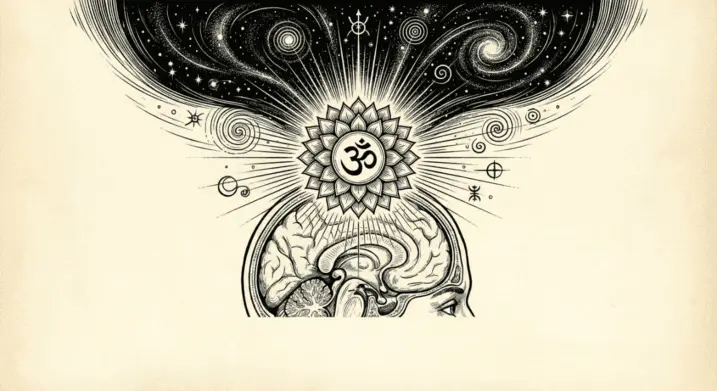
Location: Top of head
Element: Thought/Cosmic energy
Color: Violet or white
Developmental Stage: Early adulthood and beyond
Developmental Task: Universal identity, self-knowledge
Right: To know
Demon: Attachment
This chakra works like a collective network of thoughts and information. We are neurons in a global brain.
Our consciousness contributes to a larger field of awareness and is formed by it. Healing your crown chakra means reorganizing your role in that intelligence.
How the Crown Develops
It develops mainly in adulthood, as you pursue knowledge, form a worldview, and seek meaning beyond personal identity.
Crown chakra issues
Spiritual disconnection: Cynicism, life feeling meaningless, and closed-mindedness.
Spiritual bypassing: Using spirituality to avoid healing the lower chakras. “Transcending” emotions instead of healing them.
Attachment: Clinging to beliefs, identities, and outcomes. Being unable to surrender.
Dissociation: Consciousness flows above the body instead of through it.
Deficient Crown Signs:
- Learning difficulties
- Rigid belief systems
- Spiritual skepticism
- Apathy
- Materialism
- Fear of spirituality
Excessive Crown Signs:
- Spiritual addiction
- Dissociation from body
- Over-intellectualization
- Confused spiritual identity
- Ungrounded “floatiness”
Physical Malfunctions: Migraines, light sensitivity, chronic exhaustion, and neurological issues.
How to unblock crown chakra
The Core Work: Study and contemplation. Meditation. Stay grounded and connect with a higher power.
Practices:
Meditation: Silent awareness. No visualization or mantra. Pure consciousness observing itself.
Following Thoughts: Trace a thought back to its origin. Where did it come from? Follow that source back further, until you reach the “infinite source” that has no objective beginning. This practice shows you that thoughts arise from emptiness and return to it.
Study: Philosophy, mythology, comparative religion. Learn how humans across cultures have approached the ultimate questions.
Service: Connect with purposes greater than personal gain.
Silence: Make it a habit to stay quiet. Your crown speaks in silence.
Yoga Poses:
- Headstand (with care)
- Savasana: Surrender and integration
- Lotus Pose: Meditation
- Rabbit Pose: Gentle crown pressure
Affirmations:
“I am connected to all that is. Spiritual knowledge flows amidst me. I trust the universe. I am one with the infinite.”
Adult development: the second cycle
You pass through the chakras twice. In childhood, you form the basic structure. As an adult, you rework it consciously.
The Second Cycle as Conscious Re-Parenting:
Trauma or neglect often shapes your chakras as they open in sequence during childhood. Unblocking them as an adult is a conscious practice. You break the old programs.
Adult Chakra Development:
- Root: Establish independent survival (housing, income, self-care)
- Sacral: Form sexual relationships, satisfy emotional needs
- Solar Plexus: Individuate from conformity, develop personal power
- Heart: Mature empathy, long-term partnerships, examine relationship patterns, integrate masculine/feminine
- Throat: Personal contribution to community (art, business, service)
- Third Eye: Reflect on patterns, study philosophy, and spiritual meanings
- Crown: Wisdom, spiritual understanding, teaching, mastery
The order depends on the individual. You have to want to develop.
Many people stay stuck in cycles of dependency and powerlessness.
Complete chakra reference chart
| Chakra | Mantra | Element | Developmental Age | Right | Demon |
| Root | LAM | Earth | Womb-12mo | To be here | Fear |
| Sacral | VAM | Water | 6mo-2yr | To feel | Guilt |
| Solar Plexus | RAM | Fire | 18mo-4yr | To act | Shame |
| Heart | YAM | Air | 4-7yr | To love | Grief |
| Throat | HAM | Ether | 7-12yr | To speak | Lies |
| Third Eye | OM | Light | Adolescence | To see | Illusion |
| Crown | Silence | Thought | Adulthood | To know | Attachment |
Creating Your Daily Practice
Morning (10-15 minutes)
- Body scan: Which chakra needs attention?
- Grounding: Feel feet, breathe into belly
- Chakra-specific sound frequency (5-7 minutes)
- One yoga pose
- Affirmation as intention
Evening (15-20 minutes)
- Full chakra sweep: all seven frequencies, 2 minutes each
- Or deeper work on the primary blockage
- Journaling: What came up today?
- Thankfulness and silence
Weekly
- One longer session (30-45 minutes)
- Review progress, adjust focus
- Epsom salt bath with chakra-relevant herbs
What to expect when chakras unblock
Physical: Tingling, warmth, pulsing. Symptoms may increase before they release.
Emotionally: Unexpected tears and laughter. Old memories surface. Old grief moves through you.
Energy: Fatigue after sessions (your body is processing), followed by more vitality. Vivid dreams.
Life changes: Relationships shift. Career gets clearer. Creative impulses return. External reality reorganizes to match your internal shift.
Character structure changes: They come slower and go deeper. You may watch patterns you’ve had for decades gradually fade. The way you hold your body changes. Old defenses become unnecessary.
How do you unblock chakras?
Your chakras have been sending you signals for years, and now you know how to read them.
Take the chakra quiz to find out which chakra is underactive or overactive.
The fatigue, the anxiety, the creative emptiness, the walls around your heart. None of these are character flaws. They’re survival strategies that once served you.
Always start with the root.
Chakra balancing with crystals is a good addition. Specific chakra frequency sounds help a lot, and so do herbs for chakras.
How long does it take to unblock chakras
Surface-level shifts: One session can bring relief.
Pattern changes: 2-4 weeks of consistent daily practice (15-20 minutes minimum).
Deep healing: 1-3 months for trauma.
Character structure work: Months to years. These patterns are engraved into your body.